
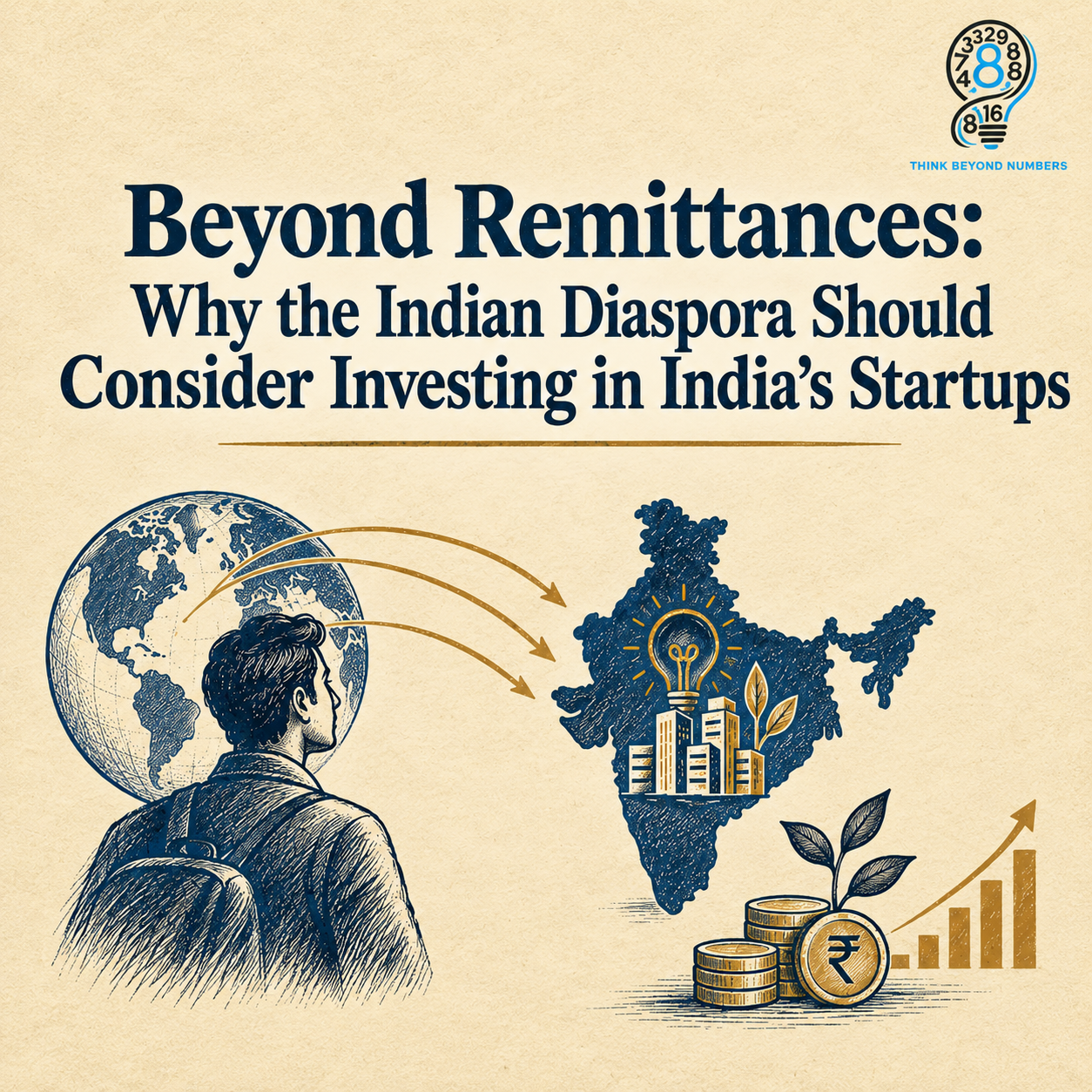
For millions of Indians who have built their lives outside the country, India continues to remain an important part of their personal and financial lives. Family commitments, property, savings, investments and professional relationships ensure that the connection often continues long after someone has moved abroad.
The scale of that financial connection is remarkable. India has consistently been the world's largest recipient of remittances, receiving approximately $137 billion in 2024. A significant part of this money comes from the large and increasingly prosperous Indian diaspora spread across the United States, the Middle East, the United Kingdom and other parts of the world.
Much of this money supports families, pays for education and healthcare, helps build homes and creates financial security. Beyond remittances, members of the diaspora also invest in Indian real estate, public markets and businesses.
The financial relationship between the Indian diaspora and India is therefore already deep and well established.
What is relatively less developed is participation by the diaspora in India's startup economy.
That is worth examining—not because startup investing should replace remittances or traditional investments, but because India's entrepreneurial economy has changed significantly over the last decade.
India has built a substantially larger entrepreneurial economy
India's startup ecosystem today bears little resemblance to the one that existed fifteen or twenty years ago.
The country now has more than 200,000 DPIIT-recognised startups, making it one of the world's largest startup ecosystems. The companies emerging from this ecosystem are operating across technology, financial services, healthcare, manufacturing, energy, defence, space and other sectors.
The change is also broader than the number of startups being created.
India has developed a much deeper ecosystem around entrepreneurship. There are venture capital firms focused on different stages of company building, angel investors, incubators, accelerators, specialised technology talent and a growing pool of experienced founders and operators who have previously built companies themselves.
Entrepreneurship is also no longer confined to a few cities. While Bengaluru, Mumbai and Delhi remain important centres, startups are increasingly emerging from other cities and industrial clusters across the country.
This does not mean that every Indian startup represents a good investment opportunity. Nor does the size of an ecosystem automatically translate into attractive returns for investors.
However, it does mean that India now has a sufficiently large and diverse entrepreneurial economy to be considered seriously as an investment market.
For members of the Indian diaspora, that presents an interesting opportunity. Many have followed India's economic growth from a distance and have participated in it indirectly through property, public markets or businesses. Startup investing offers the possibility of participating more directly in the companies that may shape the next phase of India's economic development.
The investment case is no longer based only on India's growth story
For many years, the case for India was relatively straightforward. It was a large country with a growing economy, rising incomes and an expanding middle class.
Those factors remain important. But the global context has changed.
Over the last several years, businesses and investors have had to reconsider assumptions that previously seemed relatively stable. Supply chains have been disrupted. Trade relationships have become more complicated. Wars and geopolitical tensions have affected energy markets, manufacturing and global commerce. Governments are increasingly concerned about technological dependence and strategic industries.
As a result, companies are thinking more carefully about where they manufacture, build technology and establish supply chains. Investors are also paying greater attention to geographic concentration and the long-term risks associated with having too much economic exposure to a single market.
India is becoming increasingly relevant in this environment.
The country is attempting to strengthen its position not only as a large consumer market, but also as a manufacturing base, technology ecosystem and participant in global supply chains. Whether India succeeds in every one of these ambitions remains to be seen, but the direction of travel is clear enough to deserve attention.
For an Indian-American investor, this creates an additional dimension to the investment conversation.
The United States will naturally remain the centre of most people's professional and financial lives. But geographic diversification is increasingly becoming a relevant consideration, particularly for investors whose portfolios are heavily concentrated in a single economy.
That does not mean replacing investments in the United States with investments in India. Nor does it mean treating Indian startups as a hedge against geopolitical uncertainty.
Startup investing is itself a high-risk asset class.
However, for investors who already allocate a small portion of their portfolio to private or high-risk investments, India represents an increasingly relevant geography in which to look for opportunities.
The diaspora can potentially bring more than capital
There is another reason why the Indian diaspora may have a distinctive role to play in India's startup ecosystem.
Many Indian professionals in the United States and other developed markets have spent years working inside sophisticated companies and industries. They understand global customers, technology markets, healthcare systems, enterprise sales, manufacturing processes and international business development.
For the right startup, this experience can sometimes be as useful as the capital being invested.
A technology executive in the United States may be able to help an Indian SaaS company understand its first international market. Someone working in healthcare may help a founder understand how a product could be positioned outside India. An experienced operator may be able to make introductions that would otherwise take a young company years to develop.
This is one of the potentially interesting aspects of diaspora investing. It can create a connection between Indian entrepreneurs and people who have access to global knowledge, markets and networks.
Of course, this should not be romanticised. Most investors will not have the time or inclination to actively mentor every company they invest in. Nor should founders be expected to treat investors as unpaid consultants.
But the possibility exists for capital to be accompanied by something more useful than money alone.
From a financial connection to an ownership connection
The Indian diaspora has always contributed significantly to India's development, both directly and indirectly.
The relationship has historically been expressed through remittances, family support, property ownership, philanthropy and business investment.
India's startup ecosystem offers another way to participate.
Instead of only being connected to India's economy as consumers, property owners or investors in listed securities, members of the diaspora can potentially become shareholders in companies that are still being built.
This is not a recommendation to invest blindly.
Early-stage startup investing involves significant risk. Companies can fail completely. Investments can remain illiquid for many years. Valuations can change dramatically, and successful outcomes are concentrated in a relatively small number of companies.
The objective should therefore not be to find one startup that will become the next unicorn.
For anyone considering this asset class seriously, the more important questions are likely to be around access, evaluation and portfolio construction. How do you find opportunities? How do you evaluate founders and businesses from thousands of miles away? How do you decide how much to invest? How do you build a portfolio rather than making one or two highly concentrated bets?
These questions become particularly important for diaspora investors, who are often physically distant from the companies and markets in which they are investing.
The next question is practical: how does one begin?
The Indian startup ecosystem may be more accessible than it was a decade ago, but investing in it from overseas is not always straightforward.
There are questions around investment structures, taxation, foreign exchange regulations and the repatriation of returns. Investors also need to understand the different ways in which startup investments can be made—directly, through syndicates, funds and other structures.
These issues can appear complicated, particularly to someone considering their first investment.
They do not necessarily need to be.
Over the coming articles, we will break down the practical aspects of startup investing in India for members of the diaspora. We will look at the different ways in which investments can be structured, the regulatory considerations involved and the practical questions investors should ask before committing capital.
We will also explore something that is often overlooked in conversations about angel investing: what happens after the investment is made. Finding a startup is only one part of the process. Understanding how a company performs, how investors stay informed and how a portfolio develops over time are equally important.
For now, the starting point is simply this.
The Indian diaspora already has a deep emotional and financial connection with India. At the same time, India is developing a much larger and more diverse entrepreneurial economy, while the global economic and geopolitical environment is making geographic diversification a more relevant consideration for investors.
For those who believe that India will play a larger role in the global economy over the next few decades, it may be worth considering whether a small portion of their long-term, high-risk investment capital should participate in that journey.
The next article will begin with the most practical question: what are the different ways in which someone living outside India can actually invest in an Indian startup?